

Humidity and UV rays wear concrete surfaces around pools until they crack or fade. Unsightly patches start to stand out, and the surface becomes unsafe for everyone.
Pool resurfacing is a way to avoid replacing the concrete entirely. In tropical climates, resurfacing pool decks solves emerging problems before they worsen while enhancing the surface’s appearance. Find out how and why this upgrade will make your pool deck sturdy and stunning.
Tropical Climates and Pool Deck Wear
Concrete in a tropical climate faces a different set of pressures than concrete in many other parts of the United States. In dry regions, surface wear develops at a slow pace because moisture doesn’t linger. In cold climates, freeze-thaw cycles drive a lot of the damage.
Tropical areas have challenges surrounding heat, humidity, and heavy rain. A pool deck in South Florida endures these conditions all year long. Strong UV rays fade color and weaken surface coatings over time. Moisture settles into tiny surface flaws, while wet conditions encourage mildew or discoloration.
Pool water adds another stress point because splashing, chemical residue, and damp bare feet keep the deck in constant use. Those conditions cause the material to break down in ways that look cosmetic at first but quickly affect texture, traction, and durability.

Common Reasons Pool Decks Need Resurfacing
Cracks Spread Across the Surface
Small cracks rarely stay small on a pool deck for very long. Heat encourages the slab to expand, while cool nights cause it to contract. That repeated movement puts stress on weak spots, especially on older surfaces or decks with prior wear. Once cracks open, water enters and deepens the damage.
Resurfacing stops the cycle. It covers worn areas and seals minor flaws with a fresh, durable layer.
Traction Erodes on Wet Decks
In a tropical climate, frequent rain and steady moisture make slick surfaces a real hazard. Years of foot traffic smooth out the finish, while sun exposure and water erosion strip away the original texture.
People need a little bit of traction as they walk around the pool. A deck may still look usable from a distance, but the surface underfoot tells a different story.
Resurfacing restores texture, and there are several options to choose from. A broom finish features brush strokes for a subtle, nonslip surface. Acrylic spray textures stay cool under the sun and add texture underfoot.
Simply think about the property’s design and what type of traction the deck needs. A skilled crew will install the desired finish, so slipping is no longer a frequent concern.
Moisture Leaves Stains Behind
Tropical weather leaves a mark on concrete. Rain carries dirt across the deck, humidity feeds mildew, and standing water darkens low spots. Organic debris from nearby landscaping can stain the surface, especially around edges and joints. Over time, the deck starts to look tired even before obvious structural damage.
Resurfacing corrects that worn appearance by covering stubborn discoloration with a clean, uniform finish. It doesn’t just hide stains. It gives the surface a renewed layer that resists future water intrusion better than an aging, porous slab. The deck will be clean and easy to maintain through long humid seasons.
The Surface Layer Breaks Down
Old pool decks lose their surface layer little by little. Sunlight breaks down color and sealers. Water strips away weak spots. Not to mention, chemical exposure from chlorinated water or salt systems stresses the finish. Once that layer wears off, the concrete becomes vulnerable to surface damage.
Resurfacing rebuilds the barrier between the slab and the climate around it. A new overlay or coating shields the deck from direct exposure and helps preserve the concrete below. That upgrade extends the usable life of the deck while giving the entire pool area a sharper, more cared-for appearance.
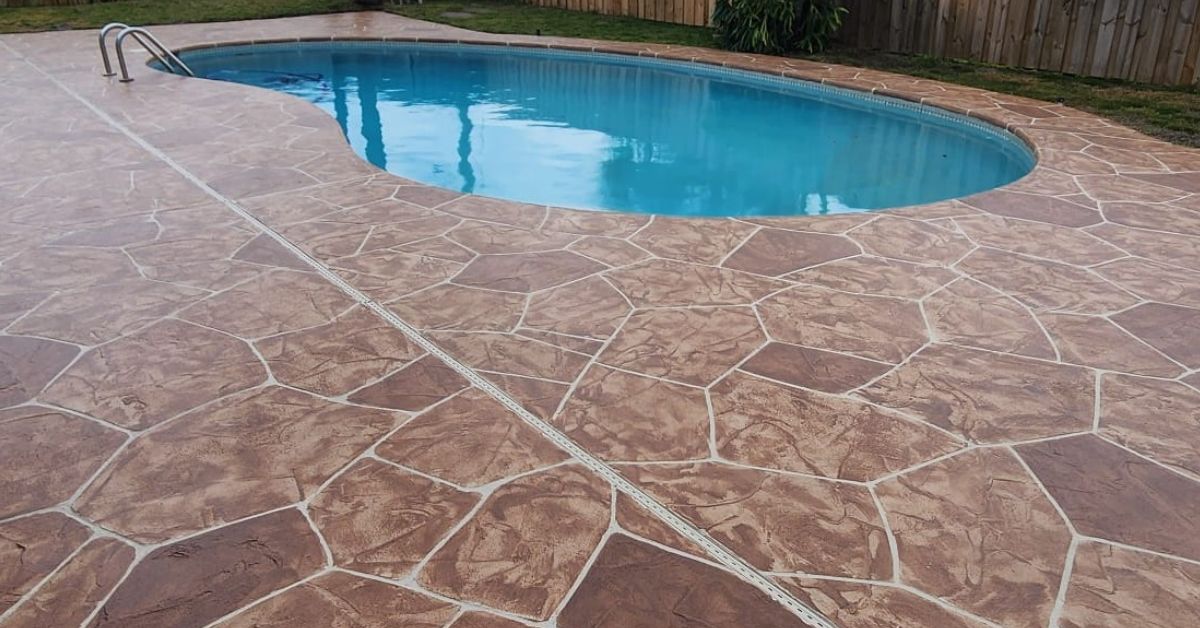
The Pool Deck Resurfacing Process
Skilled contractors shape the entire job around the primary issues affecting the deck. They will review the condition of the slab, the depth of cracks, drainage patterns, surface wear, and signs of prior coatings or patchwork. A damaged slab with major movement issues may need repair before any new finish goes down.
Next comes cleaning and preparing the surface. Crews remove dirt, mildew, loose material, old sealers, and any weak components that could prevent bonding. They repair minor cracks or chips, then profile the concrete, so the resurfacing material adheres evenly.
Once the deck is ready, the resurfacing material goes on. The installer may use a textured overlay, decorative coating, or spray finish depending on the deck’s condition and the desired result. After the surface sets, the contractor may add color or a pattern, then will seal the surface for extra durability. The finished deck will offer a refreshed appearance that stands up to the climate.
Choosing a Suitable Finish
While the design is on many homeowners’ minds, the finish needs to suit a tropical environment. Here are several popular options to consider.
- Acrylic spray textures provide slip resistance and reflect heat.
- Knockdown textures create a smooth but grippy surface that handles rain, humidity, and steady foot traffic.
- Microtoppings refresh worn concrete with a thin resurfacing layer that improves appearance and resists surface moisture.
- Cool deck coatings reduce heat buildup underfoot, making them a strong fit for hot or humid areas.
The Value of Concrete Resurfacing
A renewed surface cuts down on upkeep by covering worn concrete with a finish designed to daily wear. Routine cleaning is simple, and the deck will maintain its appearance through long, humid seasons.
Property owners also avoid the disruption tied to deep surface issues. Waiting until the deck has severe cracking, widespread surface loss, or drainage issues limits resurfacing options and pushes the project toward replacement. Early resurfacing preserves the slab and its stability.
A Fresh Surface for Pool Decks
In tropical regions, pool decks age under constant pressure from heat, moisture, UV exposure, and heavy use. Resurfacing pool decks in tropical climates restores texture and preserves the concrete before severe damage takes hold.
Concrete Design FL brings decades of experience to resurfacing projects built around Florida conditions. For property owners weighing options for concrete resurfacing in South Florida, we’ll provide a detailed installation that turns a worn lackluster surface into a fresh pool deck that lasts for years.